Vita
1947
geboren in Frankenberg / Eder
1970-1978
Studium an der Staatlichen
Kunstakademie Düsseldorf
Ausstellungen
1992
Galerie Voss, Düsseldorf
1993
Galerie Seippel, Köln
1994
Galerie Voss, Düsseldorf
Große Kunstausstellung NRW, Kunstmuseum Ehrenhof, Düsseldorf
1996
Galerie Voss, Düsseldorf
1997
Art Cologne (Galerie Voss), Köln
1998
Art Brüssel (Galerie Voss), Brüssel
Galerie Edda Andersen, Erlangen
Art International New York, New York
1999
Art Brüssel (Galerie Voss), Brüssel
Galerie Voss, Düsseldorf
2000
Art Brüssel (Galerie Voss), Brüssel
Interval, Witten
2002
Haus Opherdicke, Unna
2004
Arte Fiera Bologna (Galerie Voss), Bologna (I)
Galerie Voss, Düsseldorf
2008
"Das kleine Format", Malkasten Düsseldorf
2009
"Ritter - Cave adsum", Künstlerverein Malkasten, Jacobihaus, Düsseldorf
"Das kleine Format", Malkasten Düsseldorf
2010
"Das kleine Format", Malkasten Düsseldorf
2011
"Das kleine Format", Malkasten Düsseldorf
"Sybille Kroos, Sergio Maina, Frank Sämmer, Ulrike Zilly", Comune di Porto Ceresio, Italien
"Napoleon (...) Düsseldorf", Stadtmuseum Düsseldorf
Kataloge
Aktuelle Ausstellungen
Literatur
Wie geht’s dem König?
Anmerkungen zu den Zeichnungen von Frank Sämmer
Marianne Hoffmann
Frank Sämmers König sitzt mit geschlossenen Augen und nach vorn geneigtem Haupt scheinbar entspannt auf weichem Grund, wäre da nicht seine linke Hand, die in Abwehrhaltung nach oben gestreckt vielleicht irgend jemand Einhalt gebieten will. Das alles ist in weichem Kohlestrich auf braunem Karton fein ausgearbeitet. Allein die Krone schimmert gülden und gibt dem gebeugten Haupt die Königswürde. Müde ist er, der König, der unter seiner Krone eine Art Helm trägt. Ein Schutz, wovor? Vielleicht ist er gerade aus einer Schlacht zurückgekehrt? Zu müde den Helm abzulegen. Der Faltenwurf des prächtigen Gewandes liegt akkurat und weich drapiert, die Schuhe schön gearbeitet, Gesicht und Hände fein gezeichnet. Der Hintergrund des Bildes ist nur angedeutet. Die Konzentration auf das lineare Konstrukt von Figuren und Handlung unterscheidet Sämmers meist großformatige Zeichnungen von seinen opulenten Gemälden. „Das Hauptmotiv“, so schreibt Gerhard Charles Rump über Sämmers zeichnerisches Werk, „bekommt eine gewisse Überpräsenz…“ Diese Überpräsenz macht den Betrachter zum Voyeur, zumal wenn dieser König so überdeutlich vor uns ruht und nichts zu verbergen scheint. Die Zeichnung dieses Königs ist allerdings nur Teil eines vielleicht geplanten, aber noch nicht komponierten Ganzen. Sämmer arbeitet geradezu in der Tradition der klassischen Malerei seine Figuren aus und komponiert sie später in seine Bilder ein.
Neben der Zeichnung des müden Königs fällt die Studie zu einem Ritter in das Blickfeld des Betrachters. Ein Ritter, der in glänzender Rüstung auf seinen Einsatz wartet. Die imaginierten Bilder von Ritter und König könnten der Vorstellungswelt von Romantik und Symbolismus entstammen. Um die Figur des Ritters ranken sich Heldentaten und er steht für Begriffe wie Aufrichtigkeit und Höflichkeit. Ritterlich ist auch heute noch ein Wort, das jedes Frauenherz höher schlagen lässt. Selbst Hollywood hat sich der alten Rittergeschichten angenommen und vermarktet sie erfolgreich. Die in den Studien angelegten Figuren des Ritters und des Königs werden vielleicht später einmal ausgearbeitet in einem von Frank Sämmers oft ironisch witzigen, manchmal politisch ambitionierten Gemälden oder gezeichneten Bildern wiederkehren.
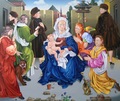
Erstaunliches erfährt man in diesen Werken. Im finsteren Wald sitzt Maria Muttergottes, an eine kleine Kirche gelehnt, vor ihr steht ein etwas zu groß geratener Teddybär und grinst sie freundlich an. Maria hat Pause von der Kindererziehung. Das Jesuskind liegt vergnügt vor der Kirche und läßt seinen Heiligenschein übermütig um den ausgestreckten Fuß kreiseln.
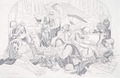
Unwirkliche Szenarien sind die Spezialität des Künstlers. Seine Bilder sind nicht selten wie Traumgemälde aus einer anderen Zeit, die den Bezug zum „Hier und Heute“ durch kleine Gegenstände aus „unserer“ jetzigen Welt ergänzen. Sei es nun Spielzeug oder aber Glühbirnen, die der Künstler kühn in ein anderes Bild eingearbeitet hat. Ein schöner Jüngling liegt in einem gläsernen Sarg und wird von mancherlei Gestalten „bewacht“. Alle scheinen zu schlafen. Ein Zwerg mit tief in das Gesicht gezogener Kapuze behält gar im Schlaf seinen mürrischen Gesichtsausdruck. Schneewittchen und die sieben Zwerge. Aber warum sollte Schneewittchen nicht ein schöner Jüngling sein? Und warum sollte neben dem Zwerg nicht auch ein Widder mit prächtigem Gehörn und menschlichem Körper sein Bewacher sein?
Und warum hat der junge Mann rechts vom Sarg Kopfhörer auf? Schläft er wirklich oder hört er nur ganz versunken Musik? Und warum schwebt vor ihm diese Glühbirne? Soll ihm ein Licht aufgehen oder ist ihm schon eins aufgegangen? Fragen über Fragen stellen sich angesichts der neuen Werke von Frank Sämmer. Fragen, die uns der Künstler persönlich zwar stellt, aber vielleicht selbst gar nicht beantworten will.
Für Sämmer ist das Bewußtsein der Abstraktion als historisches und durch die klassische moderne Malerei verstärktes Axiom eine wichtige Voraussetzung künstlerischen Malens und Zeichnens. Für ihn ist Kunst eine mythische Verschmelzung des Menschen mit seiner erlebten Wirklichkeit durch Nachbildung, ein unbeschreiblicher Wandlungsakt.
Vielleicht will sich Sämmer ja mit seinem konzeptionellen Entwurf zur großen Tradition der Malerei zurück und doch zugleich nach vorne wenden? Auch im großen Kunstbetrieb erlebt das Malen ja seit einigen Jahren eine Wiederkehr. Doch diese Bilderflut, die da auf uns zurollt, kann nur oberflächlich und erinnerungslos sein und ist auch für den Laien kaum noch zu erfassen. Aber immerhin wird wohl die wirkliche Welt wieder mehr zum Gegenstand der Malerei und der Mensch rückt von neuem in das Zentrum des künstlerischen Geschehens. Hat das vielleicht damit zu tun, dass immer mehr Singlehaushalte die innerhäusliche Gemeinschaft durch Bilder von Menschen ersetzen oder ersetzen müssen? Und passen dort nicht Frank Sämmers Bilder besonders gut hin, da sie uns in eine Zauberwelt entführen, die sich unserem harten Alltag scheinbar wohltuend und heiter entgegenstellt? Aber vielleicht machen diese Zeichnungen, diese opulenten Bilder in ihrer wohldurchdachten Komposition und Perfektion durch die Vielschichtigkeit ihrer inhaltlichen und formalen Bezüge ja auch Angst? Vielleicht auch Angst vor der Trauer der Vollendung oder Angst, weil sie uns daran erinnern, dass wir uns im Allgemeinen nicht mehr sattsehen können?
In seiner klassischen und romantisch modernen Grundhaltung hat Sämmer vielleicht Vorläufer im deutschen Nazarenertum und dem von ihm beeinflussten englischen spätromantischen Präraffaelitismus. Beide künstlerische Strömungen hoben sich vom damals korrekten künstlerischen Akademismus ab, strebten statt dessen persönlich und gefühlvoll nacherlebt in die göttliche Natur, zurück in ein edles Mittelalter und hin zu neuer christlicher Religiosität und alten Mythen. Durch große Ausstellungen nach dem Krieg, wie die in Frankfurt im Jahr 1974, aber auch durch die weite Verbreitung gedruckter kollektiver Sehnsuchtsbilder der einschlägigen Posterproduktion wurde das Bewußtsein von symbolistischer und präraffaelitischer Kunst in Deutschland wieder geweckt. Die Nazarener erlebten noch jüngst ihre Würdigung als Vorläufer der künstlerischen Moderne in der Kunsthalle Schirn.
Ist es eine zunehmende Tendenz unserer Zeit sich in Traumwelten zu flüchten oder suchen wir eine andere Form der Wirklichkeit, eine mit nicht rationalistischer, mythischer Bodenhaftung?
In Sämmers Bilderwelt herrscht das Faszinosum, versehen mit den Erinnerungsstücken aus unserer Kindheit. Was macht eine Holzeisenbahn mitten im Bild? Wir wissen es nicht und wundern uns darüber, was mit uns bei diesem Anblick passiert. Ist es eine Allegorie, die dem Wortsinn entsprechend als Zeichen für eine andere Sache eingesetzt wird? Vom Betrachter fordert die Allegorie einen Gedankensprung vom bildlich Dargestellten zur gemeinten Bedeutung. Bei der realistisch ausgeführten Allegorie, bei der schon die unmittelbare Bedeutung lehrreich oder unterhaltsam erscheint, bleibt das Vorhandensein weitergehender Intentionen oft unbemerkt. Oft wird die Allegorie auch mit dem Symbol gleichgestellt. Ästhetisch wird das Symbol häufig als poetischer empfunden und dem „kalten“ Gedankenspiel der Allegorie vorgezogen. Aber die Allegorie findet in der Kunst vielfältig ihren Niederschlag, wird gar als Personifikation von Staaten und gängig als Verbildlichung abstrakter und begrifflicher Sachverhalte verwendet. Zum Beispiel die Figur des Todes als Gerippe (das Fleisch vergeht) und mit der Sense in der Hand (es trifft jeden). Doch wofür stehen die Holzeisenbahn, die Glühbirne, der Kopfhörer in Sämmers Bildern? Und bleiben die Bedeutungszusammenhänge im gezeichneten Bild offener als im gemalten, oder sind die Bildfiguren, farbig festgelegt, leichter in ihrer Bedeutung zu ergründen?
In der Kunst des 20. Jahrhunderts galt die Zeichnung oft weniger als die Malerei, besonders im kommerziellen Kunstbetrieb nach 1945. Doch die künstlerische Praxis hat es möglich gemacht, dass die Zeichnung sich von normativen Ansprüchen, auch solchen der akademischen Ästhetik, lösen konnte. Künstler wie Cézanne begannen damit, das Prinzip der Linie für die Zeichnung anzuzweifeln. Sie ist seitdem nicht mehr festgelegt auf lineare Darstellung und reduzierten Farbeinsatz. Verschiedene Kunstbewegungen nahmen diesen Ansatz dann auf, so dass heute die theoretische Grenze zwischen Malerei und Zeichnung zunehmend verwischt. In der gegenwärtigen Ästhetik wird das Fehlen einer Theorie der Zeichnung beklagt.
Betrachtet man die Zeichnungen von Frank Sämmer, wird man begreifen, dass die Zeichnung keine Theorie benötigt. Ein hohes ästhetisches Vermögen, die Beherrschung der Zeichenstifte, egal welchen Materials, eine absolute Technik, ein unbestechliches Auge für Details und ein weitgefasstes Wissen um Inhalte und Formen der alten und der neuen Kunst sowie das Wissen um unser gelebtes Hier und Jetzt, machen seine Werke einmalig.
Links